Showing posts with label Tomas Fujiwara. Show all posts

Friday, September 30, 2016

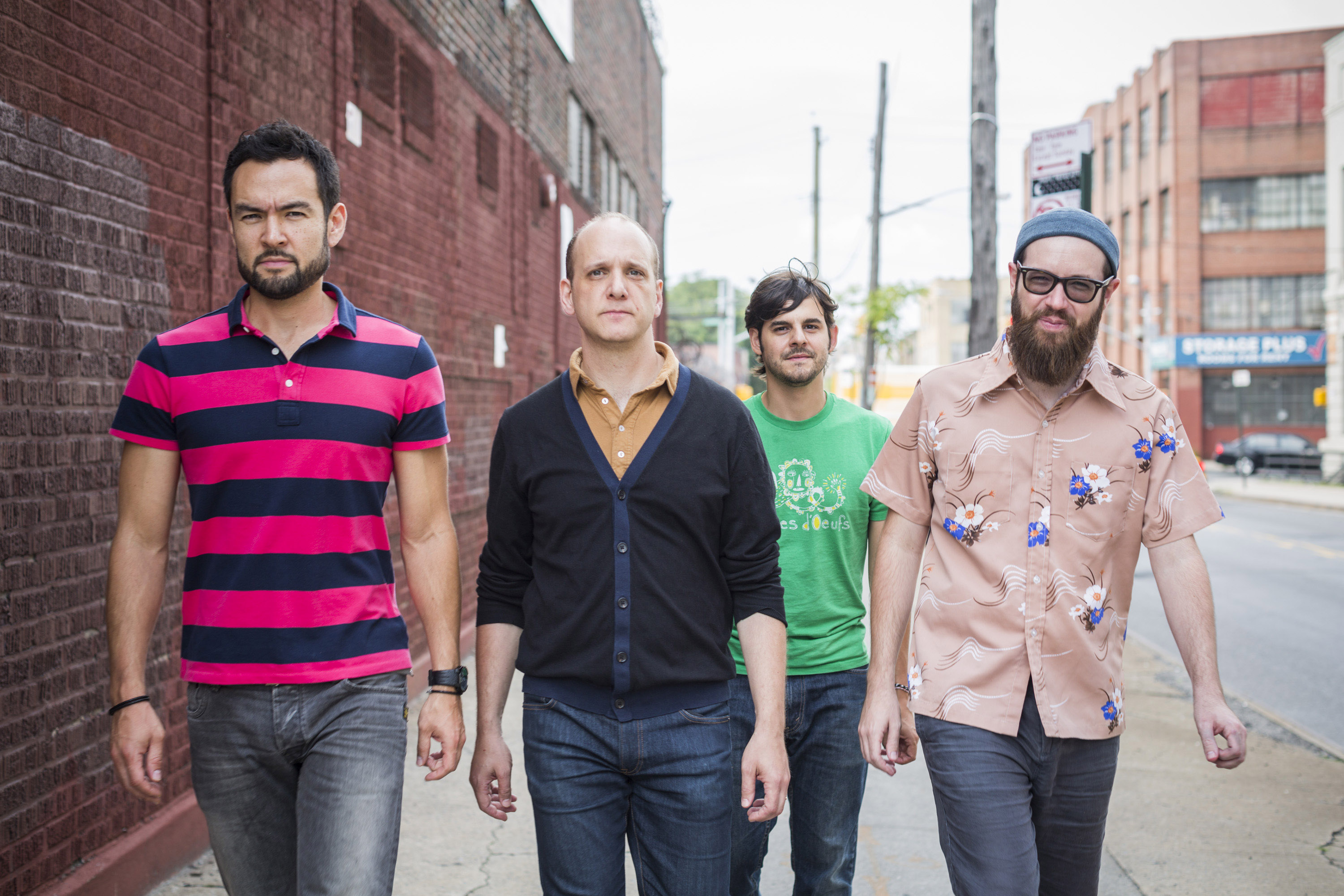
Illegal Crowns - Illegal Crowns

Illegal Crowns
Illegal Crowns

Mary Halvorson: guitar
Tomas Fujiwara: drums
Benoît Delbecq: piano, prepared piano
Taylor Ho Bynum: cornet, flugelhorn

One of the best albums I’ve heard this year. Illegal Crowns has great writing from all the players, and brings to mind the subtle magic and mystery of Miles’ Second Quintet, even though it’s very different in terms of its language and approach.

Monday, June 9, 2014

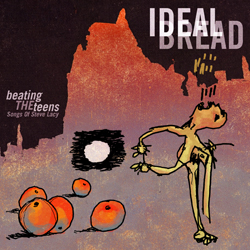
Ideal Bread - Beating the Teens

Ideal Bread
Beating the Teens

Josh Sinton – Baritone Saxophone
Kirk Knuffke – Cornet
Adam Hopkins – Bass
Tomas Fujiwara – Drums
 
“Like a baker makes his bread, I make music...If I make the same bread tomorrow, that bores me...I have to remake it, I have to do better...I’m always looking for...the ideal bread.” – Steve Lacy

Beating The Teens is Ideal Bread’s track – by – track interpretation (Josh Sinton calls them "recompositions") of the Steve Lacy set Scratching The Seventies that appeared on the French Saravah label. The songs are presented in a different order than the original, and the 3-CD set has been compacted to two discs, with most tracks clocking in at under five minutes. 

Scratching the Seventies comprised five different albums and several different groupings of musicians, including solo works, so the fact that one group is playing this music makes the presentation more homogeneous on one level. But the instrumentation of the group and their original approach to the arrangements take the material in a whole new direction. 

Lacy frequently incorporated texts into his music, either overtly or as inspiration, and this speech-like quality is brought out on Teens; it’s like listening in on a conversation between four old friends, with arguments, laughter and passionate debate. 

Josh Sinton has matured as a player since their prior release, Transmit, gaining expressiveness and facility on his horn. Kirk Knuffke is the perfect trumpeter for this project, quirky and original, yet still letting Lacy’s voice and style come through. The rhythm team of Adam Hopkins, replacing Reuben Radding, and Tomas Fujiwara contribute their voices as well, and even lock into grooves at times, something else that sets this apart from most of what I know of Lacy’s music. 

Beating the Teens plays like a jazz concept album. It’s not about the individual solos, or even the individual songs, but the gestalt of the whole set. With this album, Ideal Bread has taken a big step forward in developing a distinct voice and a distinct take on the music of Steve Lacy.


Note: In the interests of full disclosure, I contributed to the Kickstarter campaign that helped fund this release.

Sunday, May 11, 2014

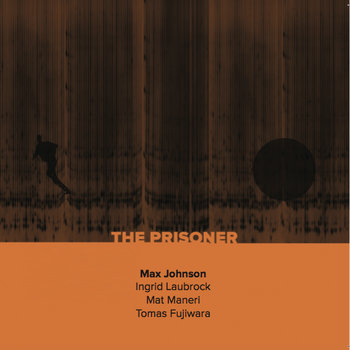
Max Johnson - The Prisoner

Max Johnson
The Prisoner
NoBusiness Records

Ingrid Laubrock - Tenor Saxophone 
Mat Maneri - Viola
Max Johnson - Bass
Tomas Fujiwara - Drums

I’ve never watched The Prisoner, the 1967-68 British TV series that starred Patrick McGoohan as a secret agent help captive by a mysterious organization, but I know it has reached iconic status over the years. Bassist Max Johnson, who recently released the excellent The Invisible Trio, has composed a tribute to the series that plays as an extended suite. 

It begins slowly, almost hesitantly, as if in a fog, with long tones from the bass and viola. Then Ingrid Laubrock sounds a siren, or perhaps a clarion call, and the first theme of the album emerges. 

The rest of The Prisoner alternates between composed and improvised sections, but even in the freer passages there’s always something anchoring the music - a rhythm, a bass line, a repeating figure - that provides some structure but doesn’t sacrifice the feeling that the musicians generate. There are some exciting passages where free-form explorations suddenly transition into theme statements with a swinging pulse, and then take a right turn in another direction. You never know what’s coming next, which from what little I know of the plot of the show is probably what is intended. 

This is a record that you can listen to one or twice and enjoy, but as you dig deeper more layers reveal themselves. Johnson constructs some interesting textures with just four instruments, and as you might expect everyone is stellar. Ingrid Laubrock can wax lyrically, reminding me of Mark Turner in spots, and then go totally abstract, utilizing extended techniques. Mat Maneri might be the most immediately recognizable string player around, and he and Johnson create a dense thicket of sound, possibly mirroring the confusion and uncertainty that plagued McGoohan’s character Number 6. Tomas Fujiwara has never been better, accenting the music perfectly and providing plenty of drive.

As I listen to The Prisoner, I get the feeling that the music is programmatic, tracking certain developments in the plot that I wish I knew. That’s one indication that The Prisoner is a success; the other is that the music stands on its own as a fascinating glimpse into the musical mind of one Max Johnson.

Sound samples and ordering information are available on Max’s Bandcamp page. 


Here's a video of the group playing this material live back in 2013:


Wednesday, February 9, 2011

A Great Time for Jazz

There was a recent post in JazzCorner's Speakeasy Forum that stated that "The players in New York are too busy slinging old hash around at Smalls or bellowing to the rafters at the Stone, while everybody else seems more fascinated by beeps and blips—you know, "texture"—than music." 

I agree to a point, but right now is an incredibly fertile time for Jazz that combines composition with improvisation in interesting ways. Some of the players who I think are emblematic of this area are Taylor Ho Bynum, Mary Halvorson, Ingrid Laubrock, Kris Davis, Satoko Fujii, Myra Melford (note how many are women), John Hebert, Tyshawn Sorey, Ken Filiano, Harris Eisenstadt, Liberty Ellman, Russ Lossing, Adam Lane, Matt Bauder, Nate Wooley, John Hollenbeck, Tomas Fujiwara (note how many are drummers), Tony Malaby and Peter Evans. I'm sure I've left many people out as well. 

There was a recent post in that same Forum about the meaning of Third Stream Music. I think a lot of what these artists produce could be considered a new type of Third Stream, one that integrates many types of musics with jazz and creates an organic blend in which the elements mesh seamlessly. 

This is a great time to love Jazz, even if it puts a strain on your wallet!

Thursday, January 20, 2011

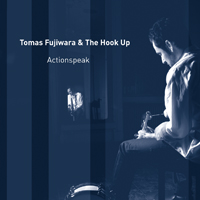
Tomas Fujiwara & The Hook Up, Actionspeak

482 Music, 482-1071
 
Danton Boller-bass
Mary Halvorson-guitar
Brian Settles-tenor saxophone
Jonathan Finlayson-trumpet
Tomas Fujiwara-drums


Actionspeak is like a forward-thinking ‘60s Blue Note release with a twist. The Blue Note influence is accounted for by Fujiwara’s admiration for the compositions of Wayne Shorter, and that “cinematic” quality is evident here. The twist is provided by Mary Halvorson’s guitar, which is given ample room to wind in and around the structures of the songs. She plays it straight occasionally, but her unique sensibilities give Actionspeak a left-of-center edge. Like many contemporary jazz recordings, it’s difficult at times to tell where the composition leaves off and the improvising begins. Settles is the new name here, at least for me, and his hoarse upper register and terse statements remind me of Frank Lowe.
 
This release has really grown on me with repeated listens, and successfully navigates between inside and outside sensibilities.