Sunday, February 1, 2026

Convergence - Reckless Meter


Greg Gisbert – trumpet
John Gunther – tenor saxophone
Mark Patterson – trombone
Eric Gunnison – piano
Mark Simon – bass
Paul Romaine – drums

Reckless Meter from the group Convergence is a really nice straight-ahead date featuring original compositions from the band. Everyone acquits themselves well; Eric Gunnison on piano is a standout. It’s great to hear from John Gunther, an underrated tenor player who reminds me a little of Tina Brooks. John had some nice CDs on the old CIMP label.

https://caprirecords.com/album/reckless-meter/

I'm back...!

Due to popular demand from, well, no one in particular actually, I've decided to give my music blog another go. I was surprised to see my last post was way back in 2017! I think what's brought me back is the fact that there's so much good music being released that isn't getting its just due. 

I've decided to change how I write in a couple of ways:

  • I'm going to keep my posts brief. This will allow me to be more prolific with my entries without taking too much time away from other interests and responsibilities.
  • I'm going to be a little more frank than I was in the past. I generally review what I really like, so don't expect to see negative reviews, but I'm going to hold myself to calling it as I see it, the positive and any perceived shortcomings.
Hopefully, I can help jazz fans find out about some great music. Here goes.


Saturday, August 12, 2017

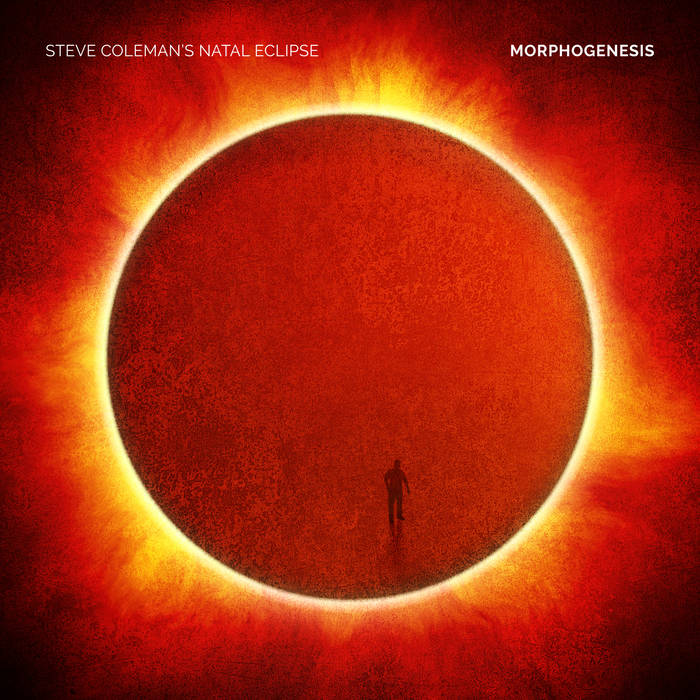
Steve Coleman’s Natal Eclipse - Morphogenesis

Morphogenesis
Steve Coleman’s Natal Eclipse

Steve Coleman - alto saxophone
Jonathan Finlayson - trumpet
Maria Grand - tenor saxophone
Rane Moore - clarinet 
Kristin Lee - violin 
Jen Shyu - vocals 
Matt Mitchell - piano 
Greg Chudzik - bass 
Neeraj Mehta - percussion

Steve Coleman has been undergoing an artistic renaissance since joining Pi Recordings in 2010. His M-Base theories have been hugely influential in contemporary jazz over many years, with followers such as Jonathan Finlayson taking his concepts and providing their own interpretations. I've had reservations about the M-Base style, chiefly that the fixed rhythms on releases such as 1995's Def Trance Beat (Modalities of Rhythm) have tended to anchor in place soloists, including Mr. Coleman, and prevented them from taking full flight.

Coleman has expanded his palette over the course of four Pi releases, and the result has been the best recordings of his career. Morphogenesis continues that streak with what is essentially an ambitious multi-part suite spanning 60-plus minutes. What's impressive is the clarity of the vision and how well the sections hang together to create the whole.

Coleman creates interest by constantly shifting the focus to different instruments in a seamless fashion distinct from the traditional jazz solo. Rhythms are more supple and varied than in his earlier works. The cyclical effect of the compositions' structures bears a faint resemblance to Anthony Braxton's Ghost Trance music, although Coleman is his own person as a composer and player.

There were a couple of sections that I felt overstayed their welcome, but overall Morphogenesis is another impressive milestone in Steve Coleman's career.

Sunday, July 16, 2017

Staub Quartet - House Full of Colors

House Full of Colors
Staub Quartet
JACC Records

Miguel Mira - cello
Zingaro - violin
Hernani Faustino - double bass
Marcelo dos Reis - acoustic guitar, prepared guitar

The musicians who make up the collective known as the Staub Quartet are part of a vital Portuguese improvised music scene and have been featured in many combinations. Hernani Faustino is part of the amazing RED Trio, while Miguel Mira is one-third of the Motion Trio with Rodrigo Amado and Gabriel Ferrandini. Marcelo dos Reis is one of the principals of Cipsela Records, which has a small yet distinguished output, including a solo album from Zingaro.

The six tracks comprising House Full of Colors are fully improvised, and I actually approached this with some initial hesitancy. There are a lot of free improv recordings getting released these days, and I find myself with less of an appetite for abstract explorations of timbre and texture, with seeming little interest in forward momentum.

Given the quality of the musicians in the Staub Quartet, I should have expected that they would provide something of value, and they do. The members are adept at moving in one direction and supporting each other, so the music seems to have a composed element to it. dos Reis occasionally introduces repeating figures from his guitar, giving those tracks a unique blend of chamber music with an almost folk influence.

There continues to be a lot of quality jazz and jazz-influenced music coming from Portugal, and House Full of Colors is a worthy addition.

Sunday, June 25, 2017

Erik Hove Chamber Ensemble - Polygon

Polygon
Erik Hove

Erik Hove - alto sax, clarinet, flute, electronics
Anna Webber - flute, alto flute
Krisjana Thorsteinson - oboe
Krista Martynes - clarinet, bass clarinet
Andy King - trumpet
Kate Bevan-Baker - violin
Jean René - viola
Jane Chan - cello
Rémi-Jean Leblanc - bass
Evan Tighe - drums 

Polygon is the follow up to Hove’s 2014 release, Saturated Colour, featuring some of the same musicians, such as fellow Canadian saxophonist Anna Webber. 

As Hove explains: “This album builds on the sounds and concepts of … Saturated Colour. The goal in writing was to expand upon ideas already in play, in addition to adding a layer of electronics to many of the tracks in order to fuse the timbres and broaden the sonic palette of the ensemble.”

Polygon is aptly titled, as tracks such as Tessellation and Tetrahedron display a mathematical rigor and a decidedly serial bent. What’s nice is that Hove will break up patterns by shifting to looser rhythms and juxtaposing a solo voice versus the ensemble, albeit in a more structured way than a traditional jazz ensemble. 

The introduction of electronic effects, particularly on Tetrahedron, proves effective and marks the biggest difference between Polygon and Colour. I hope Hove delves more deeply into this area on future releases.

Fans of Anthony Braxon’s music for mid-sized ensembles will find a lot to like here.

Sunday, April 30, 2017

Harris Eisenstadt - Recent Developments

Harris Eisenstadt
Recent Developments
Songlines

Anna Webber - flute
Sara Schoenbeck - bassoon
Nate Wooley - trumpet
Jeb Bishop - trombone
Dan Peck - tuba
Brandon Seabrook - banjo
Hank Roberts - cello
Eivind Opsvik - bass
Harris Eisenstadt - drums, compositions

Harris Eisenstadt is one of my favorite contemporary Jazz composers. His series of Canada Day quintet albums on Songlines represent a sustained high level of composing and playing, mixing the adventurous with a sense of melody that in a just world could attract a broader audience. 

Eisenstadt has featured larger groups as well, most recently on Canada Day Octet from 2012. Recent Developments has more of a chamber music sound, in spite of the fact the album includes a rhythm section of drums and acoustic bass. The album is a little deceptive; it has a light, even slight, feel to it at first. Listen further and more intricacies reveal themselves. The musicians on the record are a who’s who of today’s forward thinking jazz-related players. The ensemble sound takes precedence on Recent Developments, with the banjo of Brandon Seabrook providing an interesting and unusual textural twist.