Showing posts with label Songlines. Show all posts

Sunday, April 30, 2017

Harris Eisenstadt - Recent Developments

Harris Eisenstadt
Recent Developments
Songlines

Anna Webber - flute
Sara Schoenbeck - bassoon
Nate Wooley - trumpet
Jeb Bishop - trombone
Dan Peck - tuba
Brandon Seabrook - banjo
Hank Roberts - cello
Eivind Opsvik - bass
Harris Eisenstadt - drums, compositions

Harris Eisenstadt is one of my favorite contemporary Jazz composers. His series of Canada Day quintet albums on Songlines represent a sustained high level of composing and playing, mixing the adventurous with a sense of melody that in a just world could attract a broader audience. 

Eisenstadt has featured larger groups as well, most recently on Canada Day Octet from 2012. Recent Developments has more of a chamber music sound, in spite of the fact the album includes a rhythm section of drums and acoustic bass. The album is a little deceptive; it has a light, even slight, feel to it at first. Listen further and more intricacies reveal themselves. The musicians on the record are a who’s who of today’s forward thinking jazz-related players. The ensemble sound takes precedence on Recent Developments, with the banjo of Brandon Seabrook providing an interesting and unusual textural twist.

Sunday, May 18, 2014

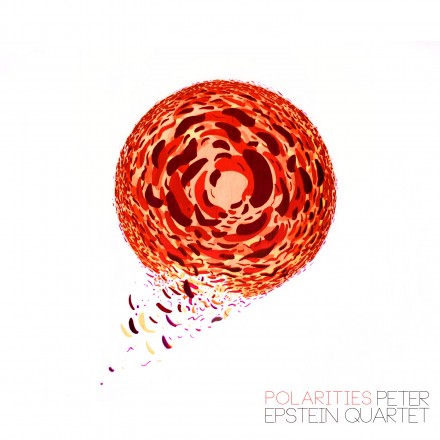
Peter Epstein Quartet - Polarities

Peter Epstein Quartet
Polarities

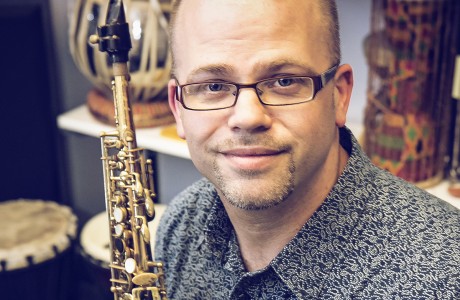
Peter Epstein - Alto & Soprano Saxophone
Ralph Alessi - Trumpet, Cornet
Sam Minaie - Bass
Mark Ferber - Drums

I was very interested when I read that Peter Epstein had released his first album in several years, Polarities. I remember discovering him at my local Tower Records (remember those?) when I ran across the series of CDs he put out on ma recordings in the late 90s. They were artfully packaged and featured great players such as Jamie Saft, Scott Colley, and Jim Black. He also had a beautiful solo sax album on that label called Solus.

It turns out that Epstein has been teaching for the past several years at the University of Nevada, Reno, where he is now director of their jazz studies program. He put out a record on Songlines back in 2005, Lingua Franca, and one on Origin called Abstract Realism, but has had a lower profile in comparison to his New York days.

Epstein has always had flawless technique, but he tended to be a little too laid back over the Polarities. There's a nice variation in mood and tempo, and he brings the heat when needed. It's a controlled burn, certainly, and Epstein never loses the lyricism that defines his style. He’s good on both horns, but on alto is where you can really hear his unique voice.
course of an entire album for my taste, and his improvisations could wander a bit. I'm happy to report that he's fixed those minor flaws on

Epstein has the perfect front line partner in Ralph Alessi, who can play in or out with equal skill. They work well with each other, trading lines and overlapping in that tight yet loose way that seems to define today’s more adventurous jazz albums. I wasn’t familiar with bassist Sam Minaie, but he and drummer Ferber hook up to provide a seamless ebb and flow to support the horns. Together, the four musicians pull off a neat trick for a group with this lineup: They don't immediately make you think of the classic Ornette Coleman quartet.

Welcome back, Mr. Epstein. It’s good to make your acquaintance again.

Sound clips are available on the Songlines website.

Sunday, April 13, 2014

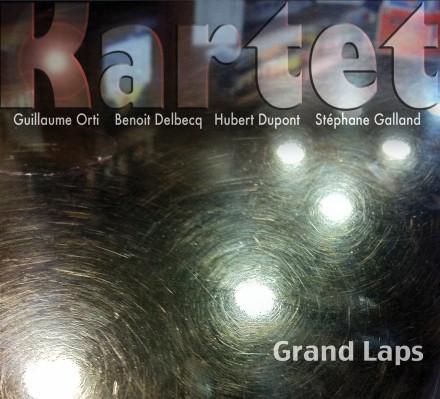
Kartet - Grand Laps

Kartet
Grand Laps
Songlines

Guillaume Orti - Saxophones
Benoit Delbecq - Piano
Hubert Dupont - Acoustic Bass
Stephane Galland - Drums

Kartet is a group operating somewhere in the intersection of avant-garde, mainstream and chamber jazz. I was not familiar with them before Grand Laps (French for "a long while"), but as it turns out the group began 25 years ago and this is their sixth album, although it’s been seven years since their previous release.

Even though the line-up is that of a classic jazz quartet, this is not a horn-with-rhythm section album; it’s more egalitarian in design. The music on Grand Laps generally unfolds at an unhurried pace, and the structures the group use emphasize dialog, not blazing displays of virtuosity. At some points I was reminded of Miles’ second quintet in their more introspective moments. There’s an MBase influence lurking as well in the angular nature of some of the compositions.

The most distinctive element of Kartet’s sound is owed to the presence of pianist Benoit Delbecq. His percussive style is immediately recognizable, and goes the furthest to define the group’s identity. Delbecq also shows his impressionistic side, with a wonderful blend of lyrically abstract playing. 

Guillaume Orti primarily plays alto, with a tone that’s a little thin in the upper register for my taste, as well as C-Melody and soprano saxes. He gives the music plenty of breathing room, although at times I wanted more direction from him to propel the music forward. Dupont does a nice job of providing support when needed while adding his own commentary. Galland, who replaces original Kartet drummer Chandler Sardjoe, implies the rhythmic structures with his shading, but turns up the intensity when required.

Kartet does a good job of integrating composed and improvised sections so that each flows easily into the other. The music on Grand Laps is challenging to the listener, but has a lyrical, attractive quality that is unexpected. A late night avant-garde album, perhaps?

Here's a video on the making of the album:

Thursday, November 21, 2013

Gordon Grdina - No Difference

Gordon Grdina
No Difference
Songlines

Gordon Grdina - Oud, Guitar, Bowed guitar
Mark Helias - Double Bass
Kenton Loewen - Drums
Tony Malaby - Tenor Saxophone

I was not familiar with Gordon Grdina’s music before No Difference, although I was aware of his long association with the Songlines label, dating back to 2006. The fact that he played the oud made me wary, I have to admit, because to my ears it has a more limited tonal range than the guitar. Also, it invariably means World Music influences, which too many times when combined with jazz only serves to water down each idiom instead of produce a compelling hybrid. The supporting cast on No Difference, however, helped dispel some of my apprehension: Drummer Kenton Loewen was also unknown to me, but Mark Helias and Tony Malaby are compelling players.

No Difference is an eclectic affair. The pieces, all by Grdina, are a mix of studio and live performances, ranging from duos with Helias to a trio track to quartet tracks with Malaby. Grdina has been quoted as saying he has tried to hear Wayne Shorter’s and Albert Ayler’s music through the guitar, but his single note lines and slightly distorted tone on the electric reminded me more of late 60s/early 70s fusion. Tony Malaby adds a lot to the quartet tracks, with gritty improvisations that retain a tie to the underlying melodies.

The part of which I was most unsure, the duets with Mark Helias and Grdina on oud, I probably enjoyed most of all. Helias offers the perfect level of support while providing his own melodic lines. Grdina’s Middle Eastern-influenced themes have an authentic feel and intensity as well.

No Difference has a split personality, but if you're a guitar fan or a fan of Middle Eastern music it won't matter to you.

Sunday, August 25, 2013

Samuel Blaser Consort in Motion, A Mirror to Machaut

Samuel Blaser Consort in Motion
A Mirror to Machaut
Songlines

Samuel Blaser - Trombone
Joachim Badenhorst - Bass Clarinet, Clarinet, Tenor Saxophone
Russ Lossing - Piano, Rhodes, Wurlitzer
Drew Gress - Double Bass
Gerry Hemingway - Drums, Percussion

A member of the Organissimo forum called the first Consort in Motion CD “a minor masterpiece,” and I would have to agree. That self-titled release on Kind of Blue had an ambitious concept: Adapt the early Italian baroque music of Monteverdi, Marini and Frescobaldi to a modern jazz ensemble. For the follow-up on Songlines, Blaser retains Russ Lossing on piano and brings in Drew Gress on bass and Gerry Hemingway for the late Paul Motian on drums. In addition, he adds a second horn in clarinetist/saxist Joachim Badenhorst.

Listening to A Mirror to Machaut without reading any background on the recording will lead one to ask why it shares the Consort in Motion label with the first CD, as the execution is much different. Not only is there the additional texture of the reed instrument, mainly clarinet, but Lossing adds Rhodes and Wurlitzer electric piano to the mix. On further inspection, the two recordings share the overarching concept of blending early music forms with jazz improvisation, this time around the late medieval music of French composers Guillaume de Machaut and Guillaume Dufay.

The tracks featuring compositions by Machaut are brief, almost too brief at times. Douce Dame Jolie features some lovely clarinet that feels cut short by the abrupt ending. The longer tracks, all composed by Blaser, alternate between a restrained, moody chamber group feel and a more funky, electronic-tinged approach. When Lossing cuts loose with some distortion and Badenhorst comments on bass clarinet, echoes of Bitches Brew are evoked. Add the trombone and you’ve got definite comparisons on those cuts to the Mwandishi band and Julian Priester’s forgotten classic, Love, Love.

The individual performances on A Mirror to Machaut are flawless. Lossing has always been very cerebral on anything I’ve heard from him, so it’s fun to hear him cut loose a little. Badenhorst is lovely on clarinets, Gress is his usual superb, subtle self and Hemingway presents a nice mix of restraint and heavier tom tom action. A Mirror to Machaut is not as cohesive as its predecessor, but it’s a rewarding recording on its own terms. 

Saturday, August 10, 2013

Floating On Wings

François Houle and Håvard Wiik
Aves
Songlines

François Houle - Clarinet
Håvard Wiik - Piano

I first came across Francois Houle in the late nineties with In The Vernacular (Songlines), his tribute to John Carter, and his work on Hornet’s Collage (Nuscope), a trio recording with Scott Fields and Jason Roebke. He excels in a variety of settings; his recording Genera (Songlines) was an overlooked gem of 2012.

Havard Wiik is probably best known for his work in Atomic, a group that for me has never equaled the sum of its parts, for whatever reason. However, he’s impressive in the Jimmy Giuffre-inspired Free Fall trio, and he added an interesting layer to the Vandermark 5 on The Horse Jumps and The Ship Is Gone (Not Two).

Aves, a studio recording, came about after a successful concert at the 2011 Vancouver International Jazz Festival. There’s a lot of music to digest, almost 70 minutes across 14 tracks. Houle composed five pieces, Wiik three, and five are free improvisations. The remaining track, Letter to Gyorgy L., was composed by Benoit Delbecq.

There’s a nice variety of moods on Aves, from playful to somber, and Wiik and Houle are perfectly in sync throughout. Each finishes the other’s thoughts, and you feel that you’re being included in a private conversation. One of many nice aspects to this album is the space each gives the other for individual statements during the performances. When they come back together, it heightens the richness they create. Think of a perfect Fall day, when you can feel the crispness in the air and the seasonal colors are on display. That’s the imagery this CD brought to mind, no mean feat when it’s 105 degrees outside!

Houle’s tone and articulation on the clarinet are unmatched. My one quibble is the flute sound he achieves on one track, so close to the real thing I had to check the liner notes to make sure he wasn’t doubling. While it doesn’t reduce the impact of the overall album, it’s not particularly compelling either.

Wiik is a virtual encyclopedia of post-modern jazz piano, while nicely mixing 20th century classical influences. He’s lyrical one moment, jagged and angular the next. It never comes across as pastiche, however, just appropriate to the context.

It’s a credit to both artists that the free tracks stand up versus those based on compositions, and the whole recording is a cohesive body of music. For fans of the Giuffre trio or chamber jazz in general, this is as good as it gets.