Showing posts with label Samuel Blaser. Show all posts

Monday, January 13, 2014

Blaser/Delbecq/Hemingway - fourth landscape

Samuel Blaser
Benoit Delbecq
Gerry Hemingway
fourth landscape
Nuscope Recordings

Samuel Blaser - Trombone
Benoit Delbecq - Steinway D Piano, Novation Bass Station
Gerry Hemingway - Drums, Percussion, Mouth Harp

fourth landscape is an album that strikes that perfect balance between composed and improvised materials. I believe it was Coltrane who first called improvisation “spontaneous composition” and the improvisations here are so well placed within the structures created that it becomes hard to tell where one stops and the other begins. In fact, it wasn’t until my second spin of landscape that I was sure it wasn’t an entirely free improv affair. 

Inspection of the cover reveals that all the pieces are, in fact, composed, four by Delbecq, four by Blaser, and three by Hemingway. Marc Chenard’s illuminating notes state that ten of the eleven selections were communicated via traditional notation on score paper. The CD cover is my only nit concerning the project, for Nuscope has gone away from their signature look that features original art, and instead used a prosaic photograph of water.

Those who have heard Delbecq’s releases on Songlines such as Circles and Calligrams and The Sixth Jump, know that he has a very unique style that utilizes some prepared piano techniques for a percussive effect, particularly in the lower register. I think that he sometimes overuses this approach, but here again the word “balance” comes into play, as he syncs up with Hemingway to establish percussion-based phrases that sound inspired by African rhythms. Elsewhere, he contributes sparkling single-note runs and even a little synthesized bass, very sparingly and tastefully, to bolster the group sound.

And what remains to be said about Samuel Blaser? There is seemingly no end to his imagination or his ability to fit in perfectly in any situation. He has flawless technique, but that technique doesn’t get in the way of his expression. You can be sure that an album he is on is one worth exploring.

fourth landscape draws you into these musicians’ world of sound and creates a space with its own internal logic. It’s a wonderful combination of composition that allows for freedom, and free playing that sounds composed. It’s a gem, and perhaps the best thing that Nuscope has ever released.

Tuesday, December 10, 2013

The Top Jazz Releases of 2013


Here, in order, are my top 10 jazz releases of 2013. I kept my list to 10 in order to conform to the format established by Francis Davis, who graciously asked me to take part in his 8th annual jazz critics poll, hosted this year by NPR Music. For this blog I cheated and added an "Honorable Mention" list as well, below the list of my main choices.

My top 10 are:

Mary Halvorson Septet - Illusionary Sea (Firehouse 12)
Ms. Halvorson takes yet another step forward in an already remarkable career. In a lineage with Point of Departure.

Convergence Quartet – Slow & Steady (No Business)
Taylor Ho Bynum and Alexander Hawkins both figure again on this list, and along with Dominic Lash and Harris Eisenstadt, reinvent a traditional-sounding trumpet/piano/bass/drums lineup.

Taylor Ho Bynum Sextet & 7-tette – Navigation (Firehouse 12)
Fascinating to hear how he approaches recasting a set of materials over four performances outside of his work with Braxton.

Drew Gress – The Sky Inside (Pirouet)
Compelling compositions and arrangements from Gress, and compelling performances from his long-time collaborators. 


Craig Taborn – Chants (ECM)
A dark, complex record that with mysterious depths beneath the surface. 

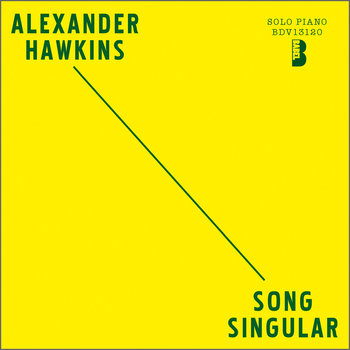
Alexander Hawkins – Song Singular (Babel Label)
The record that puts Hawkins in the same league as Melford, Taborn, Fujii, etc. 

Ralph Alessi – Baida (ECM)
Alessi seems in total command of his horn and his approach, and he sounds like he’s having fun as well. 

Satoko Fujii Trio – Spring Storm (Libra)
Another winning trio record. 

Francois Houle/Havard Wiik – Aves (Songlines)
A beautiful dialogue between clarinet and piano.

Nate Wooley – (Sit In) The Throne of Friendship (Clean Feed)
Wooley has some pretty wild freer recordings, but I like him best when he balances composition with unique arrangements. 


Honorable mentions:

Ingrid Laubrock Anti-House - Strong Place (Intakt)

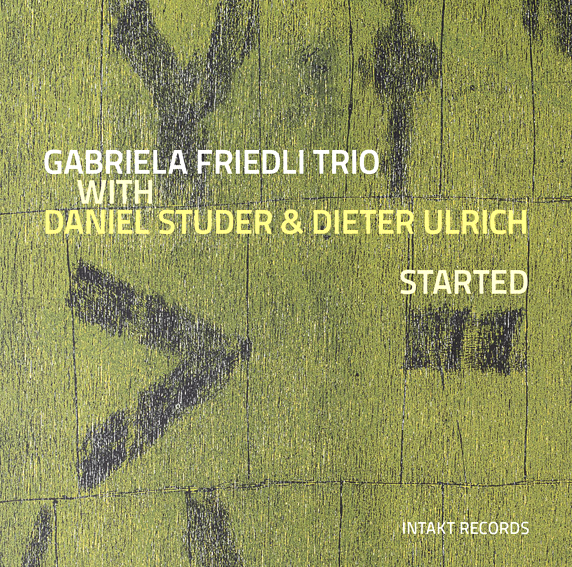
Gabriella Friedli Trio – Started (Intakt)

Samuel Blaser/Benoit Delbecq/Gerry Hemingway - Fourth Landscape (Nuscope)

Harris Eisenstadt – Golden State (Songlines)

Tim Berne's Snakeoil - Shadow Man (ECM)

Satoko Fujii – Gen Himmel (Libra)

Full results of Mr. Davis' poll will be posted in the coming days at www.nprmusic.org.

Sunday, August 25, 2013

Samuel Blaser Consort in Motion, A Mirror to Machaut

Samuel Blaser Consort in Motion
A Mirror to Machaut
Songlines

Samuel Blaser - Trombone
Joachim Badenhorst - Bass Clarinet, Clarinet, Tenor Saxophone
Russ Lossing - Piano, Rhodes, Wurlitzer
Drew Gress - Double Bass
Gerry Hemingway - Drums, Percussion

A member of the Organissimo forum called the first Consort in Motion CD “a minor masterpiece,” and I would have to agree. That self-titled release on Kind of Blue had an ambitious concept: Adapt the early Italian baroque music of Monteverdi, Marini and Frescobaldi to a modern jazz ensemble. For the follow-up on Songlines, Blaser retains Russ Lossing on piano and brings in Drew Gress on bass and Gerry Hemingway for the late Paul Motian on drums. In addition, he adds a second horn in clarinetist/saxist Joachim Badenhorst.

Listening to A Mirror to Machaut without reading any background on the recording will lead one to ask why it shares the Consort in Motion label with the first CD, as the execution is much different. Not only is there the additional texture of the reed instrument, mainly clarinet, but Lossing adds Rhodes and Wurlitzer electric piano to the mix. On further inspection, the two recordings share the overarching concept of blending early music forms with jazz improvisation, this time around the late medieval music of French composers Guillaume de Machaut and Guillaume Dufay.

The tracks featuring compositions by Machaut are brief, almost too brief at times. Douce Dame Jolie features some lovely clarinet that feels cut short by the abrupt ending. The longer tracks, all composed by Blaser, alternate between a restrained, moody chamber group feel and a more funky, electronic-tinged approach. When Lossing cuts loose with some distortion and Badenhorst comments on bass clarinet, echoes of Bitches Brew are evoked. Add the trombone and you’ve got definite comparisons on those cuts to the Mwandishi band and Julian Priester’s forgotten classic, Love, Love.

The individual performances on A Mirror to Machaut are flawless. Lossing has always been very cerebral on anything I’ve heard from him, so it’s fun to hear him cut loose a little. Badenhorst is lovely on clarinets, Gress is his usual superb, subtle self and Hemingway presents a nice mix of restraint and heavier tom tom action. A Mirror to Machaut is not as cohesive as its predecessor, but it’s a rewarding recording on its own terms.