Monday, January 13, 2014

Blaser/Delbecq/Hemingway - fourth landscape

Samuel Blaser
Benoit Delbecq
Gerry Hemingway
fourth landscape
Nuscope Recordings

Samuel Blaser - Trombone
Benoit Delbecq - Steinway D Piano, Novation Bass Station
Gerry Hemingway - Drums, Percussion, Mouth Harp

fourth landscape is an album that strikes that perfect balance between composed and improvised materials. I believe it was Coltrane who first called improvisation “spontaneous composition” and the improvisations here are so well placed within the structures created that it becomes hard to tell where one stops and the other begins. In fact, it wasn’t until my second spin of landscape that I was sure it wasn’t an entirely free improv affair. 

Inspection of the cover reveals that all the pieces are, in fact, composed, four by Delbecq, four by Blaser, and three by Hemingway. Marc Chenard’s illuminating notes state that ten of the eleven selections were communicated via traditional notation on score paper. The CD cover is my only nit concerning the project, for Nuscope has gone away from their signature look that features original art, and instead used a prosaic photograph of water.

Those who have heard Delbecq’s releases on Songlines such as Circles and Calligrams and The Sixth Jump, know that he has a very unique style that utilizes some prepared piano techniques for a percussive effect, particularly in the lower register. I think that he sometimes overuses this approach, but here again the word “balance” comes into play, as he syncs up with Hemingway to establish percussion-based phrases that sound inspired by African rhythms. Elsewhere, he contributes sparkling single-note runs and even a little synthesized bass, very sparingly and tastefully, to bolster the group sound.

And what remains to be said about Samuel Blaser? There is seemingly no end to his imagination or his ability to fit in perfectly in any situation. He has flawless technique, but that technique doesn’t get in the way of his expression. You can be sure that an album he is on is one worth exploring.

fourth landscape draws you into these musicians’ world of sound and creates a space with its own internal logic. It’s a wonderful combination of composition that allows for freedom, and free playing that sounds composed. It’s a gem, and perhaps the best thing that Nuscope has ever released.

Thursday, January 2, 2014

New 2014 hatOLOGY and hat[now]ART Releases

I’ve been a big fan of HatHut and its offshoots, hatOLOGY and hat[now]ART, for years. I treasure the LPs and CDs from these endeavors of Mr. Uehlinger that I have in my collection, as everything is first rate, from the graphics to the liner notes to the sound quality to, of course, the music. Artists such as Anthony Braxton have done some of their very best work for the label.

I’ve been saddened by the reduced output of the labels over the past few years, brought on in part by their loss of sponsorship from UBS (formerly Swiss Bank). But seemingly out of the blue, eight new releases are now making their way to online retailers:

hatOLOGY 703
Albert Ayler Quintet
Lörrach, Paris 1966

hatOLOGY 712
Polwechsel
Traces Of Wood

hatOLOGY 724
Joe Morris
Mess Hall

hatOLOGY 725
Michel Wintsch, Christian Weber, Christian Wolfarth
Willisau

And the new hat[now]ART releases are:

hat[now]ART 183
Charles Ives
A songbook

hat[now]ART 185
Liza Lim
The Guest
Orchestral Works

hat[now]ART 190
Karlheinz Stockhausen
Mantra
Mark, Knoop, Roderick, Chadwick, Amstrong

hat[now]ART 191
Fritz Hauser
Pieces for percussion
Ensemble XII, Steven Schick

The Ayler is a reissue, but the other hatOLOGYs are new. I’m especially interested in the Joe Morris, as it’s a trio with Steve Lantner, a pianist who has two fine releases of his own on the label. I’m not as up on the classical side of things, so I can’t speak for the hat[now]ARTs. Just to make things interesting, these are not all being released at the same time, but according to their website between now and April.

Sunday, December 22, 2013

2013 NPR Jazz Critics Poll

The results of Francis Davis' annual poll, which this year is being hosted by NPR Music, are now online. There's also a separate article by Mr. Davis with his thoughts on the results and his personal choices. Here are my comments, which I posted at the end of his article:

"I was surprised that Without A Net (Wayne Shorter) was the #1 album, but I suppose I shouldn’t be. I knew that a large portion of the jazz audience was looking backwards, but I didn’t realize so many critics were as well. It’s not a bad album, but it’s not anywhere near his best work or the best of what was released in 2013. As for the rest of the poll, there’s a lot to like, but I was also puzzled that Functional Arrhythmias (Steve Coleman) rated so highly, as I think Coleman’s last couple of releases were much stronger. In fact, I thought Jonathan Finlayson’s Moment and the Message was a better take on M-Base concepts. But kudos to Mr. Davis for some of his personal choices, particularly for calling attention to records from Myra Melford, Eric Revis, and Taylor Ho Bynum..."

The individual choices of each critic, including mine, have also been posted separately.

Tuesday, December 10, 2013

The Top Jazz Releases of 2013


Here, in order, are my top 10 jazz releases of 2013. I kept my list to 10 in order to conform to the format established by Francis Davis, who graciously asked me to take part in his 8th annual jazz critics poll, hosted this year by NPR Music. For this blog I cheated and added an "Honorable Mention" list as well, below the list of my main choices.

My top 10 are:

Mary Halvorson Septet - Illusionary Sea (Firehouse 12)
Ms. Halvorson takes yet another step forward in an already remarkable career. In a lineage with Point of Departure.

Convergence Quartet – Slow & Steady (No Business)
Taylor Ho Bynum and Alexander Hawkins both figure again on this list, and along with Dominic Lash and Harris Eisenstadt, reinvent a traditional-sounding trumpet/piano/bass/drums lineup.

Taylor Ho Bynum Sextet & 7-tette – Navigation (Firehouse 12)
Fascinating to hear how he approaches recasting a set of materials over four performances outside of his work with Braxton.

Drew Gress – The Sky Inside (Pirouet)
Compelling compositions and arrangements from Gress, and compelling performances from his long-time collaborators. 


Craig Taborn – Chants (ECM)
A dark, complex record that with mysterious depths beneath the surface. 

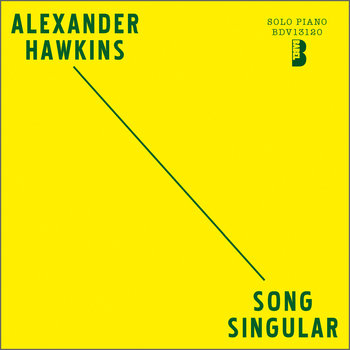
Alexander Hawkins – Song Singular (Babel Label)
The record that puts Hawkins in the same league as Melford, Taborn, Fujii, etc. 

Ralph Alessi – Baida (ECM)
Alessi seems in total command of his horn and his approach, and he sounds like he’s having fun as well. 

Satoko Fujii Trio – Spring Storm (Libra)
Another winning trio record. 

Francois Houle/Havard Wiik – Aves (Songlines)
A beautiful dialogue between clarinet and piano.

Nate Wooley – (Sit In) The Throne of Friendship (Clean Feed)
Wooley has some pretty wild freer recordings, but I like him best when he balances composition with unique arrangements. 


Honorable mentions:

Ingrid Laubrock Anti-House - Strong Place (Intakt)

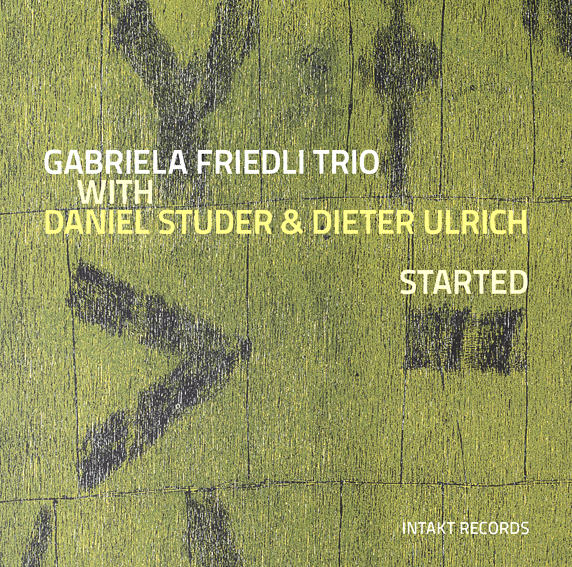
Gabriella Friedli Trio – Started (Intakt)

Samuel Blaser/Benoit Delbecq/Gerry Hemingway - Fourth Landscape (Nuscope)

Harris Eisenstadt – Golden State (Songlines)

Tim Berne's Snakeoil - Shadow Man (ECM)

Satoko Fujii – Gen Himmel (Libra)

Full results of Mr. Davis' poll will be posted in the coming days at www.nprmusic.org.

Thursday, November 21, 2013

Gordon Grdina - No Difference

Gordon Grdina
No Difference
Songlines

Gordon Grdina - Oud, Guitar, Bowed guitar
Mark Helias - Double Bass
Kenton Loewen - Drums
Tony Malaby - Tenor Saxophone

I was not familiar with Gordon Grdina’s music before No Difference, although I was aware of his long association with the Songlines label, dating back to 2006. The fact that he played the oud made me wary, I have to admit, because to my ears it has a more limited tonal range than the guitar. Also, it invariably means World Music influences, which too many times when combined with jazz only serves to water down each idiom instead of produce a compelling hybrid. The supporting cast on No Difference, however, helped dispel some of my apprehension: Drummer Kenton Loewen was also unknown to me, but Mark Helias and Tony Malaby are compelling players.

No Difference is an eclectic affair. The pieces, all by Grdina, are a mix of studio and live performances, ranging from duos with Helias to a trio track to quartet tracks with Malaby. Grdina has been quoted as saying he has tried to hear Wayne Shorter’s and Albert Ayler’s music through the guitar, but his single note lines and slightly distorted tone on the electric reminded me more of late 60s/early 70s fusion. Tony Malaby adds a lot to the quartet tracks, with gritty improvisations that retain a tie to the underlying melodies.

The part of which I was most unsure, the duets with Mark Helias and Grdina on oud, I probably enjoyed most of all. Helias offers the perfect level of support while providing his own melodic lines. Grdina’s Middle Eastern-influenced themes have an authentic feel and intensity as well.

No Difference has a split personality, but if you're a guitar fan or a fan of Middle Eastern music it won't matter to you.

Tuesday, November 5, 2013

Drew Gress – The Sky Inside

Drew Gress
The Sky Inside
Pirouet

Drew Gress - Bass, Electronics
Tim Berne - Alto Saxophone
Ralph Alessi - Trumpet
Craig Taborn - Piano
Tom Rainey - Drums

The Sky Inside is the fourth release by Drew Gress with essentially the same group. He started with Spin & Drift (2001, Premonition), a release that looked good on paper but never really fulfilled its promise. 7 Black Butterflies (2005, Premonition) substituted Craig Taborn for Uri Caine and added trumpeter Ralph Alessi. I initially passed when it came out, but eventually came around and was very glad I did. He followed that with The Irrational Numbers (2008, Koch), another excellent record.

The Sky Inside shows that everyone has grown as mature, expressive players over the years. Tom Rainey is a modern rhythm master, able to accentuate the proceedings without calling undue attention to himself. Tim Berne and Alessi are both in the middle of probably the most productive periods of their careers, with their respective ECM albums and numerous guest appearances. Taborn shows himself to particularly good effect, whether helping hold down repeating rhythmic figures or providing key transitions in the compositions.

There’s always something interesting going on with Gress’s arrangements, a sense of motion and intricacy underneath while the horns play with and around each other. While his compositions strike a balance between melody and abstraction, In Streamline stands out because it is simply, unabashedly, beautiful. It reminded me of one of those perfect fall days when I lived in NYC, walking along brownstones in the afternoon sun, everything right with the world, if only for a moment. It’s the kind of performance that would be perfect on the soundtrack of a sophisticated, urban film.

As with the previous releases, there’s a very subtle use of electronic effects to enhance the arrangements in some places on the record. I usually hate any kind of studio manipulation, but the effects work here because they are so unobtrusive.

Distribution has been an issue recently for the label in the U.S., but you should be able to get it through Downtown Music Gallery, or through the Pirouet website.