Saturday, June 28, 2014

Satoko Fujii Orchestra New York - Shiki

Satoko Fujii Orchestra New York
Shiki

Oscar Noriega, Briggan Krauss – Alto sax
Ellery Eskelin, Tony Malaby – Tenor sax
Andy Laster – Baritone sax
Natsuki Tamura, Herb Robertson, Steven Bernstein, Dave Ballou – Trumpet

Curtis Hasselbring, Joey Sellers, Joe Fielder – Trombone
Satoko Fujii – Piano
Stomu Takeishi – Bass
Aaron Alexander - Drums

Shiki is Satoko Fujii’s ninth album with her Orchestra New York, and for the occasion she’s brought back her collection of downtown all-stars. It’s a testament to Ms. Fujii’s tenacity and vision, and the regard with which the musicians must hold for her, that she’s been able to keep a core group intact for eighteen years.

The album continues in the vein of its predecessor, Eto, in that the title composition plays more of a supportive role rather than standing out for its theme. Shiki, which means “four seasons”, presents a series of long simple motifs that rise and fall like the swell of waves, constantly building and releasing tension. The composition serves as a backdrop, framing a series of explorations by individual soloists. Just when you think the band has lost its way, Fujii re-introduces a thematic thread to pull the performance back together. 

Gen Himmel, which was the title track from Fujii’s most recent solo album, is a beautiful composition, given a somber, processional feel by the band, with aching interjections by a trumpeter, I assume Natsuki Tamura. Here his extended techniques work well to convey what comes across as profound grief for the loss of bassist Norikatsu Koreyasu, a member of Tamura’s Gato Libre quartet. The shortest of the tracks at less than seven minutes, it left me wanting more.

Bi Ga Do Da by Natsuki Tamura is a tribal romp, with slightly deranged vocal exhortations by the band of the rhythmic words that make up the title. Here the band is front and center, as opposed to any particular soloist, although Fujii does contribute some of her signature fractured piano runs, something that is kept to the background for most of the album. 

Shiki, both the composition and the album as a whole, comes across as the trumpet section’s showcase, given the solos on the title track by Herb Robertson and Steve Bernstein, and for Natsuki Tamura’s contributions. They use a lot of extended techniques, and I found myself wanting to hear a good “clean” trumpet sound for at least part of a solo, but that’s about my only quibble with the album.

Monday, June 9, 2014

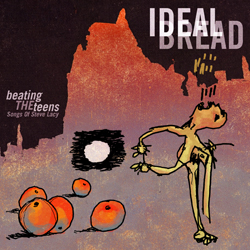
Ideal Bread - Beating the Teens

Ideal Bread
Beating the Teens

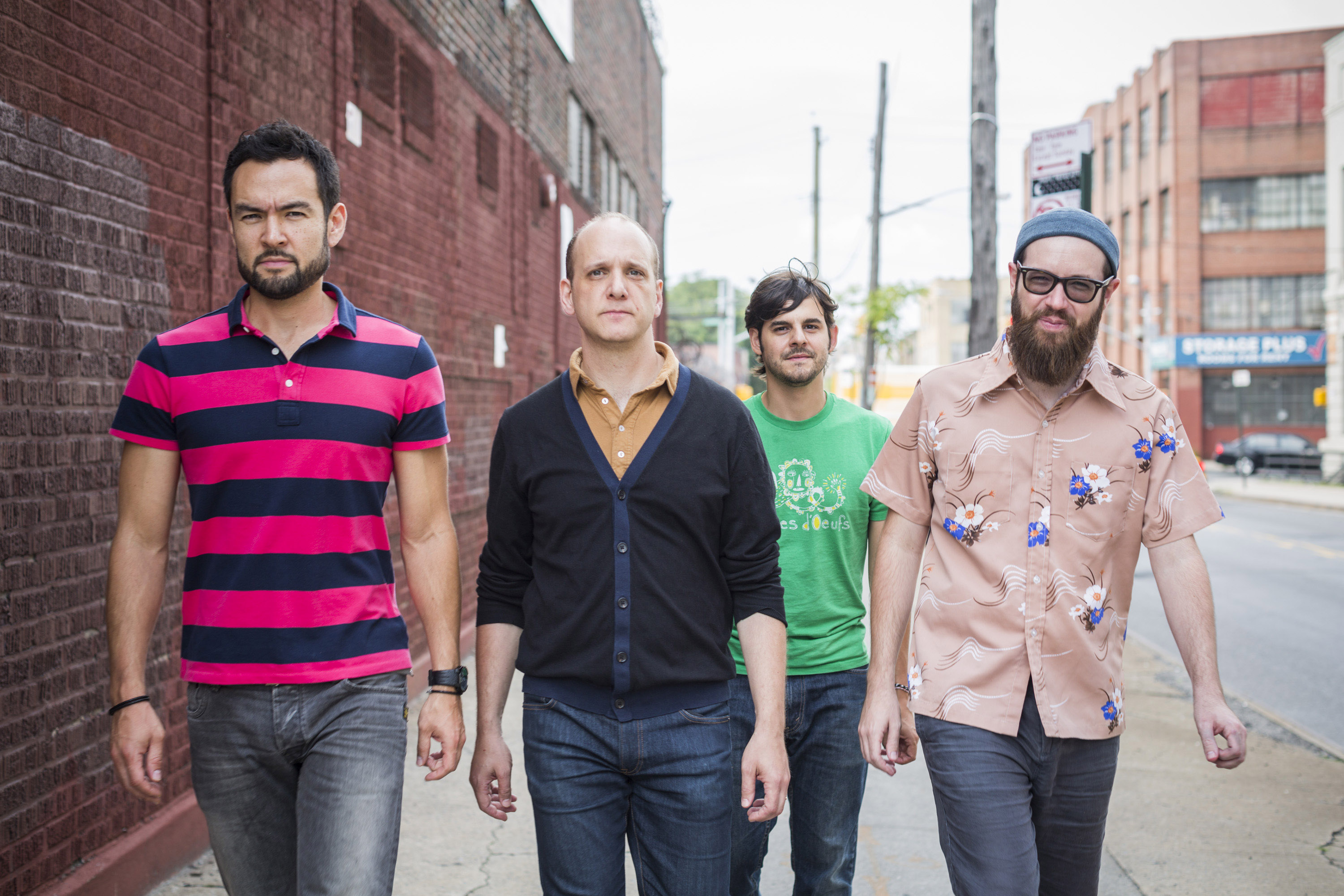
Josh Sinton – Baritone Saxophone
Kirk Knuffke – Cornet
Adam Hopkins – Bass
Tomas Fujiwara – Drums
 
“Like a baker makes his bread, I make music...If I make the same bread tomorrow, that bores me...I have to remake it, I have to do better...I’m always looking for...the ideal bread.” – Steve Lacy

Beating The Teens is Ideal Bread’s track – by – track interpretation (Josh Sinton calls them "recompositions") of the Steve Lacy set Scratching The Seventies that appeared on the French Saravah label. The songs are presented in a different order than the original, and the 3-CD set has been compacted to two discs, with most tracks clocking in at under five minutes. 

Scratching the Seventies comprised five different albums and several different groupings of musicians, including solo works, so the fact that one group is playing this music makes the presentation more homogeneous on one level. But the instrumentation of the group and their original approach to the arrangements take the material in a whole new direction. 

Lacy frequently incorporated texts into his music, either overtly or as inspiration, and this speech-like quality is brought out on Teens; it’s like listening in on a conversation between four old friends, with arguments, laughter and passionate debate. 

Josh Sinton has matured as a player since their prior release, Transmit, gaining expressiveness and facility on his horn. Kirk Knuffke is the perfect trumpeter for this project, quirky and original, yet still letting Lacy’s voice and style come through. The rhythm team of Adam Hopkins, replacing Reuben Radding, and Tomas Fujiwara contribute their voices as well, and even lock into grooves at times, something else that sets this apart from most of what I know of Lacy’s music. 

Beating the Teens plays like a jazz concept album. It’s not about the individual solos, or even the individual songs, but the gestalt of the whole set. With this album, Ideal Bread has taken a big step forward in developing a distinct voice and a distinct take on the music of Steve Lacy.


Note: In the interests of full disclosure, I contributed to the Kickstarter campaign that helped fund this release.

Tuesday, June 3, 2014

The Star Pillow - The Beautiful Questions & Via Del Chiasso

The Star Pillow
The Beautiful Questions
Setolo Di Maiale/Taverna Records

Paolo Monti – Electric Guitar, Electronics
Federico Gerini – Acoustic Grand Piano

The Star Pillow is a duo consisting of guitarist Paolo Monti and pianist Federico Gerini. Stefano Guist’s Setola Di Maiale label has jointly released these two albums with Taverna Records, founded by Monti. Setola Di Maiale, profiled in a previous post, is frequently home to satisfying, unexpected music in high quality CD-R format and these releases are no exception. 

The Beautiful Questions could best be described as ambient. It’s a quiet, ruminative affair, with the musicians establishing soundscapes that float in the air. There’s an ornery side to their musical personality, though, as one or the other will throw in a curveball to disrupt the flow, before returning to a more placid state. There’s intent and purpose here, but as this is not a genre I listen to, it’s hard for me to judge the extent of their success. As the musicians state:

“The time dilates, the instinct is left free to roam, to follow unusual routes, to get lost in the sound and in the time of a note or a noise, and then become dissonant and disturb the quiet calm created.”

The Star Pillow Meet Bruno Romani
Via Del Chiasso
Setolo Di Maiale/Taverna Records

Paolo Monti – Guitars & Effects
Federico Gerini – Acoustic Upright Piano
Bruno Romani – Alto Sax, Flute, Ethnic Flute

Via Del Chiasso is a very different affair. The Star Pillow add Bruno Romani on sax and flute, and this brings out the free improv side of their personality. The three musicians work well together, generating a nice dialogue between them.

The music on Via Del Chiasso seems to have some pre-determined themes, generally introduced by Gerini, that frequently have a darker, pensive quality about them. Gerini plays an upright, which intentionally or unintentionally is a little out of tune: Think Cecil Taylor’s piano on Nefertiti, The Beautiful One Has Come. Guitarist Monti can pick some jazzy single note lines or generate electronic effects as commentary. The closing track, In Rosso, features the most traditional jazz piano of the whole album, working well with Romani’s cool-toned alto to end on an upbeat note. 

You can order either CD via the Setola Di Maiale website.

Monday, May 26, 2014

Vertigo Trombone Quartet - Developing Good Habits

Vertigo Trombone Quartet
Developing Good Habits

Nils Wogram - Trombone
Andreas Tschopp - Trombone
Bernhard Bamert - Trombone
Jan Schreiner – Bass Trombone

The Internet is a wonderful thing. Not a startling revelation, I know, but that’s how I came to hear a sample from Nils Wogram’s new group, an aggregation I could have easily overlooked. For despite the fact that Wogram is an excellent musician, whose 2012 album Complete Soul I’ve previously reviewed, a trombone quartet would normally have been low on my list of groupings to investigate.

That would have been my loss, for Developing Good Habits is an engaging, multi-textured record. It’s fascinating to hear how lines get introduced, extended, blended and developed between the four players. Some of the record brings to mind a swaggering Ellington brass section, and some of it a classical chamber quartet. The group doesn’t get into a lot of extended techniques, but they’re not missed, as the quartet generates a nice full, rounded sound with intricate arrangements that support solo passages. 

There’s a lot of life, joy and humanity in Nils Wogram’s music, and it’s present on Habits in abundance. The music is forward-thinking, but it doesn’t lose the connection to the emotional reasons why we listen to jazz. The Vertigo Trombone Quartet strikes a nice balance between accessibility and adventure.

Developing Good Habits is available as a CD or download from Nil’s NWog Records site.

Sunday, May 18, 2014

Peter Epstein Quartet - Polarities

Peter Epstein Quartet
Polarities

Peter Epstein - Alto & Soprano Saxophone
Ralph Alessi - Trumpet, Cornet
Sam Minaie - Bass
Mark Ferber - Drums

I was very interested when I read that Peter Epstein had released his first album in several years, Polarities. I remember discovering him at my local Tower Records (remember those?) when I ran across the series of CDs he put out on ma recordings in the late 90s. They were artfully packaged and featured great players such as Jamie Saft, Scott Colley, and Jim Black. He also had a beautiful solo sax album on that label called Solus.

It turns out that Epstein has been teaching for the past several years at the University of Nevada, Reno, where he is now director of their jazz studies program. He put out a record on Songlines back in 2005, Lingua Franca, and one on Origin called Abstract Realism, but has had a lower profile in comparison to his New York days.

Epstein has always had flawless technique, but he tended to be a little too laid back over the Polarities. There's a nice variation in mood and tempo, and he brings the heat when needed. It's a controlled burn, certainly, and Epstein never loses the lyricism that defines his style. He’s good on both horns, but on alto is where you can really hear his unique voice.
course of an entire album for my taste, and his improvisations could wander a bit. I'm happy to report that he's fixed those minor flaws on

Epstein has the perfect front line partner in Ralph Alessi, who can play in or out with equal skill. They work well with each other, trading lines and overlapping in that tight yet loose way that seems to define today’s more adventurous jazz albums. I wasn’t familiar with bassist Sam Minaie, but he and drummer Ferber hook up to provide a seamless ebb and flow to support the horns. Together, the four musicians pull off a neat trick for a group with this lineup: They don't immediately make you think of the classic Ornette Coleman quartet.

Welcome back, Mr. Epstein. It’s good to make your acquaintance again.

Sound clips are available on the Songlines website.

Thursday, May 15, 2014

New Martin Kuchen on Clean Feed, Injuries

Just saw on Facebook via Clean Feed that Marin Kuchen has a new CD and double LP coming out next week with his nonet Angles 9 called Injuries. The label has a teaser video on YouTube, and it sounds mighty good: