Friday, April 3, 2026

Roberto Magris/Denis Razz Quartet - In Action

In Action
Roberto Magris/Denis Razz Quartet
JMood Records

Roberto Magris – acoustic and electric piano, keyboards, Hammond organ, Mexican whistles
Denis Razz – alto and soprano sax, flute
Karlo Ilić – acoustic bass, electric guitar, oud
Rajko Ergić – drums, percussion and soprano sax 

This 2-disc set covers a LOT of ground, from CTI-style jams with electric piano to post-bop and more abstract pieces. I'm only familiar with Magris, but all the musicians acquit themselves well. Razz can burn on the alto and Magris seems to be at home no matter the setting.

Each piece is good on its own merits, but the extreme breadth of styles makes for a somewhat disjointed listening experience. If you purchase, I would think about sequencing the tracks differently and having the more mainstream pieces separate from the other selections.

https://jmoodrecords.bandcamp.com/album/in-action-2

What I'm Listening To - April 3 edition

 Here are some of the albums I've found rewarding to listen to over the past few weeks:

The Solastalgia Suite
Kris Davis and the Lutosławski Quartet
https://krisdavis.bandcamp.com/album/the-solastalgia-suite-hi-res-24bit-96k

Tuesday, February 10, 2026

John Vanore - Easter Island Suite


John Vanore - composer, trumpet
Michael Mee - alto saxophone, flute
Bob Howell - saxophone, bass clarinet
Brian Landrus - bass clarinet
Greg Kettinger - guitar
Ron Thomas - piano
Craig Thomas - bass
Other musicians unidentified

I don't know much about John Vanore, although he did a nice reimagining of Oliver Nelson's Stolen Moments a few years ago. Easter Island Suite is Mr. Vanore's composition, and it features four parts or movements that work well individually and collectively. I'm not familiar with any of the musicians except Brian Landrus, and since John is Philly based, I'm guessing that's where these guys are from.

The arrangements are no frills, in the sense that they don't have a lot of unusual colors or instrumentation. They work well, though, and provide a lot of solo space to his band, especially the saxophonists. Easter Island Suite is a recording I've returned to multiple times, which says something with the amount of music I listen to!

Sunday, February 1, 2026

Convergence - Reckless Meter


Greg Gisbert – trumpet
John Gunther – tenor saxophone
Mark Patterson – trombone
Eric Gunnison – piano
Mark Simon – bass
Paul Romaine – drums

Reckless Meter from the group Convergence is a really nice straight-ahead date featuring original compositions from the band. Everyone acquits themselves well; Eric Gunnison on piano is a standout. It’s great to hear from John Gunther, an underrated tenor player who reminds me a little of Tina Brooks. John had some nice CDs on the old CIMP label.

https://caprirecords.com/album/reckless-meter/

I'm back...!

Due to popular demand from, well, no one in particular actually, I've decided to give my music blog another go. I was surprised to see my last post was way back in 2017! I think what's brought me back is the fact that there's so much good music being released that isn't getting its just due. 

I've decided to change how I write in a couple of ways:

  • I'm going to keep my posts brief. This will allow me to be more prolific with my entries without taking too much time away from other interests and responsibilities.
  • I'm going to be a little more frank than I was in the past. I generally review what I really like, so don't expect to see negative reviews, but I'm going to hold myself to calling it as I see it, the positive and any perceived shortcomings.
Hopefully, I can help jazz fans find out about some great music. Here goes.


Saturday, August 12, 2017

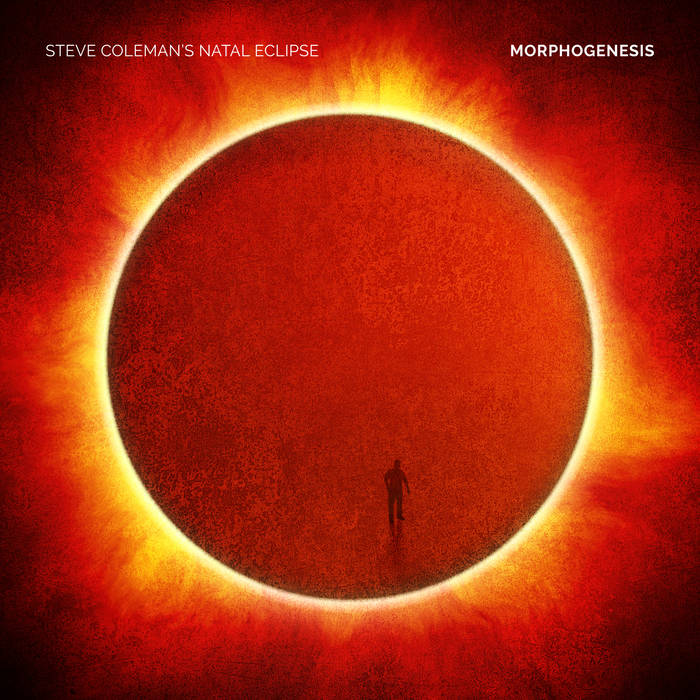
Steve Coleman’s Natal Eclipse - Morphogenesis

Morphogenesis
Steve Coleman’s Natal Eclipse

Steve Coleman - alto saxophone
Jonathan Finlayson - trumpet
Maria Grand - tenor saxophone
Rane Moore - clarinet 
Kristin Lee - violin 
Jen Shyu - vocals 
Matt Mitchell - piano 
Greg Chudzik - bass 
Neeraj Mehta - percussion

Steve Coleman has been undergoing an artistic renaissance since joining Pi Recordings in 2010. His M-Base theories have been hugely influential in contemporary jazz over many years, with followers such as Jonathan Finlayson taking his concepts and providing their own interpretations. I've had reservations about the M-Base style, chiefly that the fixed rhythms on releases such as 1995's Def Trance Beat (Modalities of Rhythm) have tended to anchor in place soloists, including Mr. Coleman, and prevented them from taking full flight.

Coleman has expanded his palette over the course of four Pi releases, and the result has been the best recordings of his career. Morphogenesis continues that streak with what is essentially an ambitious multi-part suite spanning 60-plus minutes. What's impressive is the clarity of the vision and how well the sections hang together to create the whole.

Coleman creates interest by constantly shifting the focus to different instruments in a seamless fashion distinct from the traditional jazz solo. Rhythms are more supple and varied than in his earlier works. The cyclical effect of the compositions' structures bears a faint resemblance to Anthony Braxton's Ghost Trance music, although Coleman is his own person as a composer and player.

There were a couple of sections that I felt overstayed their welcome, but overall Morphogenesis is another impressive milestone in Steve Coleman's career.

Sunday, July 16, 2017

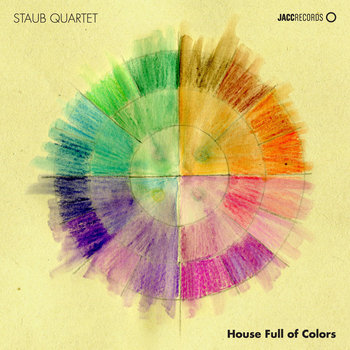
Staub Quartet - House Full of Colors

House Full of Colors
Staub Quartet
JACC Records

Miguel Mira - cello
Zingaro - violin
Hernani Faustino - double bass
Marcelo dos Reis - acoustic guitar, prepared guitar

The musicians who make up the collective known as the Staub Quartet are part of a vital Portuguese improvised music scene and have been featured in many combinations. Hernani Faustino is part of the amazing RED Trio, while Miguel Mira is one-third of the Motion Trio with Rodrigo Amado and Gabriel Ferrandini. Marcelo dos Reis is one of the principals of Cipsela Records, which has a small yet distinguished output, including a solo album from Zingaro.

The six tracks comprising House Full of Colors are fully improvised, and I actually approached this with some initial hesitancy. There are a lot of free improv recordings getting released these days, and I find myself with less of an appetite for abstract explorations of timbre and texture, with seeming little interest in forward momentum.

Given the quality of the musicians in the Staub Quartet, I should have expected that they would provide something of value, and they do. The members are adept at moving in one direction and supporting each other, so the music seems to have a composed element to it. dos Reis occasionally introduces repeating figures from his guitar, giving those tracks a unique blend of chamber music with an almost folk influence.

There continues to be a lot of quality jazz and jazz-influenced music coming from Portugal, and House Full of Colors is a worthy addition.

Sunday, June 25, 2017

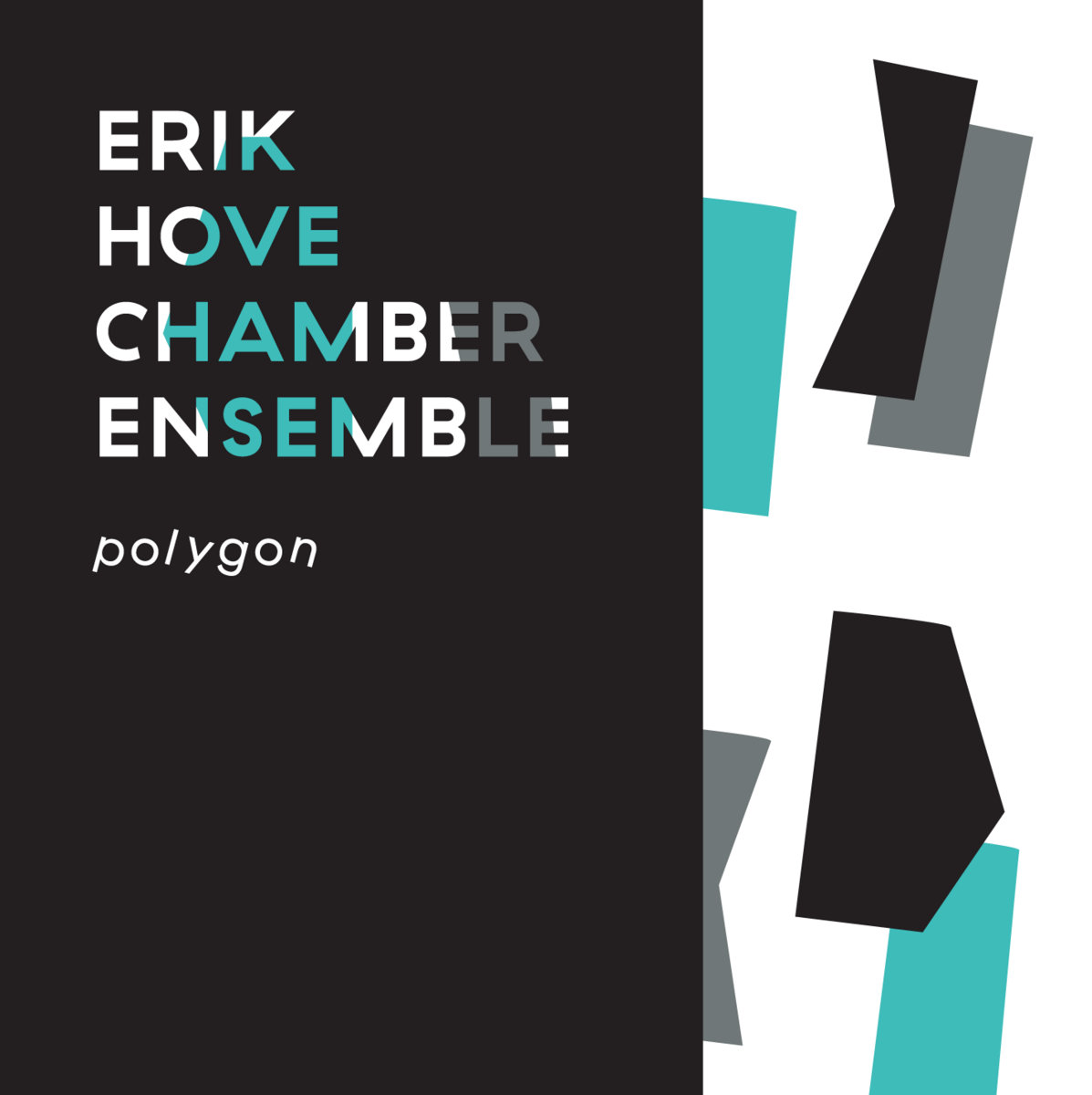
Erik Hove Chamber Ensemble - Polygon

Polygon
Erik Hove

Erik Hove - alto sax, clarinet, flute, electronics
Anna Webber - flute, alto flute
Krisjana Thorsteinson - oboe
Krista Martynes - clarinet, bass clarinet
Andy King - trumpet
Kate Bevan-Baker - violin
Jean René - viola
Jane Chan - cello
Rémi-Jean Leblanc - bass
Evan Tighe - drums 

Polygon is the follow up to Hove’s 2014 release, Saturated Colour, featuring some of the same musicians, such as fellow Canadian saxophonist Anna Webber. 

As Hove explains: “This album builds on the sounds and concepts of … Saturated Colour. The goal in writing was to expand upon ideas already in play, in addition to adding a layer of electronics to many of the tracks in order to fuse the timbres and broaden the sonic palette of the ensemble.”

Polygon is aptly titled, as tracks such as Tessellation and Tetrahedron display a mathematical rigor and a decidedly serial bent. What’s nice is that Hove will break up patterns by shifting to looser rhythms and juxtaposing a solo voice versus the ensemble, albeit in a more structured way than a traditional jazz ensemble. 

The introduction of electronic effects, particularly on Tetrahedron, proves effective and marks the biggest difference between Polygon and Colour. I hope Hove delves more deeply into this area on future releases.

Fans of Anthony Braxon’s music for mid-sized ensembles will find a lot to like here.

Sunday, April 30, 2017

Harris Eisenstadt - Recent Developments

Harris Eisenstadt
Recent Developments
Songlines

Anna Webber - flute
Sara Schoenbeck - bassoon
Nate Wooley - trumpet
Jeb Bishop - trombone
Dan Peck - tuba
Brandon Seabrook - banjo
Hank Roberts - cello
Eivind Opsvik - bass
Harris Eisenstadt - drums, compositions

Harris Eisenstadt is one of my favorite contemporary Jazz composers. His series of Canada Day quintet albums on Songlines represent a sustained high level of composing and playing, mixing the adventurous with a sense of melody that in a just world could attract a broader audience. 

Eisenstadt has featured larger groups as well, most recently on Canada Day Octet from 2012. Recent Developments has more of a chamber music sound, in spite of the fact the album includes a rhythm section of drums and acoustic bass. The album is a little deceptive; it has a light, even slight, feel to it at first. Listen further and more intricacies reveal themselves. The musicians on the record are a who’s who of today’s forward thinking jazz-related players. The ensemble sound takes precedence on Recent Developments, with the banjo of Brandon Seabrook providing an interesting and unusual textural twist.

Thursday, March 30, 2017

Miles Okazaki - Trickster

Miles Okazaki - Trickster

Miles Okazaki - guitar
Craig Taborn - piano
Anthony Tidd - bass
Sean Rickman - drums

Trickster is an apt name, as what at first seems like a quiet, unassuming recording turns into an unexpected delight with further investigation. Okazaki has accomplished a difficult feat: Making a record that is both adventurous and accessible. 

Okazaki and his group take Steve Coleman’s M-Base concepts and apply their own interpretation, one which encompasses complex rhythms married to compositions with attractive melodies, even hints of the blues and boogie-woogie.

Okazaki has a quiet style that fits the music perfectly, and Craig Taborn does his usual fantastic job of fitting into a group concept and bringing his point of view. Tidd and Rickman are less well known to me, but provide sure-handed support in support of the mood of each piece.

Miles Okazaki has taken a huge leap forward in his evolution as an artist with Trickster.

Sunday, March 12, 2017

Rich Halley and Carson Halley - The Wild

The Wild
Rich Halley - tenor saxophone, wood flute
Carson Halley - drums

The Wild is a new album of duets by saxophonist Rich Halley and his son Carson. I’ve seen the elder Halley’s name around, but have never heard him up to now. The album is divided into 10 tracks, ranging roughly from 4 to 8 minutes each, and the feel is free, even though there are some pre-determined melodies used as springboards to improvisation.

The album feels like a throwback, to a time when free improv, at least on this side of the pond, was more closely tied to the jazz tradition. The sax and drums format call to mind the classic Interstellar Space, and Halley is clearly influenced by Coltrane. He has enough of his own voice, though, contrasting sections of overblowing with lyrical phrasing, showing a tender side on occasion. In fact, it’s in these more reflective moments that I feel I’m more connected to his music, something I’ve observed with other artists who bring a lot of energy to their playing. Sometimes the conversation between musicians seems to be more nuanced at more relaxed moments.

What I like about this record is the performances unfold organically and at their own pace, with a variety of moods and tempos. Carson mixes up his approach between fixed tempos with a slight rock feel and totally free drumming. The length of the tracks means that, with a couple of exceptions, the Halley’s maintain a good level of focus and a sense of moving things forward, again linking to the jazz tradition.

Sunday, March 5, 2017

Satoko Fujii Orchestra Tokyo - Peace

Satoko Fujii Orchestra Tokyo
Peace

Satoko Fujii: conductor/composer; Kunihiro Izumi: alto sax; Sachi Hayasaka: soprano sax, alto sax; Kenichi Matsumoto: tenor sax; Ryuichi Yoshida: baritone sax; Natsuki Tamura: trumpet; Yosihito Fukumoto: trumpet; Takao Watanabe: trumpet; Yusaku Shirotani: trumpet; Haguregumo Nagamatsu: trombone; Yasuyuki Takahashi: trombone; Toshihiro Koiki: trombone;Toshiki Nagata: bass; Akira Harikoshi: drums; Christian Pruvost: trumpet; Peter Orins: drums

Of Satoko Fujii’s five orchestras (Tokyo, Nagoya, Kobe, New York and Berlin), Orchestra Tokyo might display the best balance between composition and improvisation. Whereas Orchestra New York, in particular, has leaned heavily in the direction of showcasing individual talent, perhaps because of the collection of all-stars she has in her band, Orchestra Tokyo provides some compelling evidence why Ms. Fujii has been called “the Ellington of the avant-garde.”

Knowing this, I listened to the opening of 2014, the lengthy first track on the album, with some growing trepidation as a trumpet (Tamura I believe) led off with an exploration of extended techniques that eventually wore out its welcome. However, at about the ten-minute mark, things really got underway and from there the listener is treated to an experience that continually shifts between composed sections and improvised ones, with varying degrees of dark and light. Christian Pruvost and Peter Orins, members of her small group Kaze, are on board for this album and they integrate seamlessly.

Peace is dedicated to the late Kelly Churko, the guitarist associated with the noise genre and who played on Orchestra Tokyo’s previous release, Zakopane. Throughout the album you hear sadness, anguish, anger and some grudging hope. Peace resolves with the closing Beguine Nummer Eins, which mixes majesty with folk-like simplicity, resulting in a melody that will stay with you. Not quite peace, but at least a sense of hopeful resignation.

Sunday, February 19, 2017

Satoko Fujii - Invisible Hand

Satoko Fujii
Invisible Hand
Cortez Sound

Satoko Fujii - piano

Invisible Hand, surprisingly, is Satoko Fujii’s first live solo recording, although you wouldn’t know from the pristine sound and edited applause. There’s not even a glass clink or cough to be heard. The inaugural release from clubowner Teruhiko Ito’s Cortez Sound label, Invisible Hand is a major milestone for Ms. Fujii, who has only released three solo albums previous to this.

The first CD of the two CD set was completely improvised, while the second features her compositions, and it’s a credit to her compositional and organizing skills that the difference is not readily apparent. Ms. Fujii covers a lot of stylistic ground, from playing inside the piano to allusions to stride to a percussive prepared piano on Floating that reminded me of Benoit Delbecq. You can still hear a little of Paul Bley’s influence, Ms. Fujii’s mentor, perhaps because of his passing only three months prior to this concert, although that's purely a guess.

Gen Himmel (Libra), her previous solo album from 2012, was generally a restrained affair with twelve mostly shorter tracks. Invisible Hand, however, features longer performances, some with suite-like structures of distinct parts. There are turbulent moments on Invisible Hand, but overall you come away with a sense of peace. You could almost call it avant-garde meditation music.

The composition Gen Himmel, featured on both albums, serves as a useful comparison. On the album of the same name, the composition is tinged with foreboding, as Ms. Fujii creates some eerie textures by playing inside the piano. Here, Gen Himmel is striking in its directness, its plain emotion, evoking a sense of yearning and reflection. It’s so beautiful it will break your heart, and it’s a fitting ending to a complex journey.

Thursday, December 1, 2016

Best of 2016

I'm honored to have been invited to take part in Francis Davis' 11th Annual Jazz Critics Poll, hosted by NPR Music for the fourth consecutive year. As usual, it's hard to edit a list down to ten new releases. Here are my choices, including reissues and best debut:

New releases:

Michael Formanek Ensemble Kolossus
The Distance
ECM

Dan Weiss
Sixteen: Drummer's Suite
Pi Recordings

Mary Halvorson Octet
Away With You
Firehouse 12

Tim Stine Trio 
Tim Stine Trio
Astral Spirits

Christoph Irniger Pilgrim
Big Wheel Live
Intakt

Bill Charlap Trio
Notes from New York
Impulse

Illegal Crowns
Illegal Crowns
Rogue Art

Ches Smith
The Bell
ECM

Igor Osypov Quartet
Dream Delivery
For Tune

Mark Dresser
Sedimental You
Clean Feed

Reissues:

Jimmy Giuffre 3
Bremen and Stuttgart 1961
Emanem

Anthony Braxton
Quintet (Basel) 1977
Hatology

Wadada Leo Smith
Reflectivity
Tzadik

Debut:

Ron Stabinsky
Free for One
Hot Cup

Monday, November 7, 2016

Mark Dresser - Sedimental You

Mark Dresser
Sedimental You
Clean Feed Records

Mark Dresser - bass
Nicole Mitchell - flute
Marty Erlich - clarinet
Michael Dessen - trombone
Joshua White - piano
David Morales Boroff - violin
Jim Black - drums

Recently I acquired an old Columbia 2-record set called Outstanding Jazz Compositions of the 20th Century featuring Third Stream works such as Jazz Suite for Brass (J.J. Johnson), Three Little Feelings (John Lewis) and All About Rosie (George Russell).

Perhaps it's because I listened to Sedimental You shortly after hearing those older works, but I see Mark Dresser in a continuum with the Third Stream composers of the late 50s, who were trying to fuse jazz with classical and concert band music.

In an age where there are countless Free Improv sessions of debatable long-term value being released by small aggregations, it's refreshing to see someone craft adventurous compositions with small group arrangements that skillfully bring together a mix of woodwinds and strings.

Based on the composition titles, there are political points to be made on Sedimental You, but the compositions hold together without that context.

This, along with Dresser's compositions on the DVD Virtual Tour: A Reduced Carbon Footprint Concert Series, provides insight into where modern Jazz-influenced composition is heading.

Saturday, October 1, 2016

Tyshawn Sorey - The Inner Spectrum of Variables

Tyshawn Sorey
The Inner Spectrum of Variables
Pi Recordings

Tyshawn Sorey - composer, conductor, drum set
Christopher Tordini - contrabass
Cory Smythe - piano
Chern Hwei Fung - violin
Kyle Armbrust - viola
Rubin Kodheli - cello

I realize that I’m late to the game on this one, even though I’ve been listening to it ever since it came out earlier this year. I’ve hesitated to review it, because I feel ill-equipped to comment on a work that is so informed by the classical music tradition. 

However, on its own merits The Inner Spectrum of Variables is an ambitious work that deftly combines strings, piano and percussion to make an assured, mature statement as a composition. Given that Sorey is one of the best jazz drummers working today, you might expect Variables to be heavy on percussion, but in actuality the accents are subtle. Cory Smyth is wonderful, as he was on Sorey’s trio album from 2014, Alloy.

Friday, September 30, 2016

Illegal Crowns - Illegal Crowns

Illegal Crowns
Illegal Crowns

Mary Halvorson: guitar
Tomas Fujiwara: drums
Benoît Delbecq: piano, prepared piano
Taylor Ho Bynum: cornet, flugelhorn

One of the best albums I’ve heard this year. Illegal Crowns has great writing from all the players, and brings to mind the subtle magic and mystery of Miles’ Second Quintet, even though it’s very different in terms of its language and approach.

Sunday, September 25, 2016

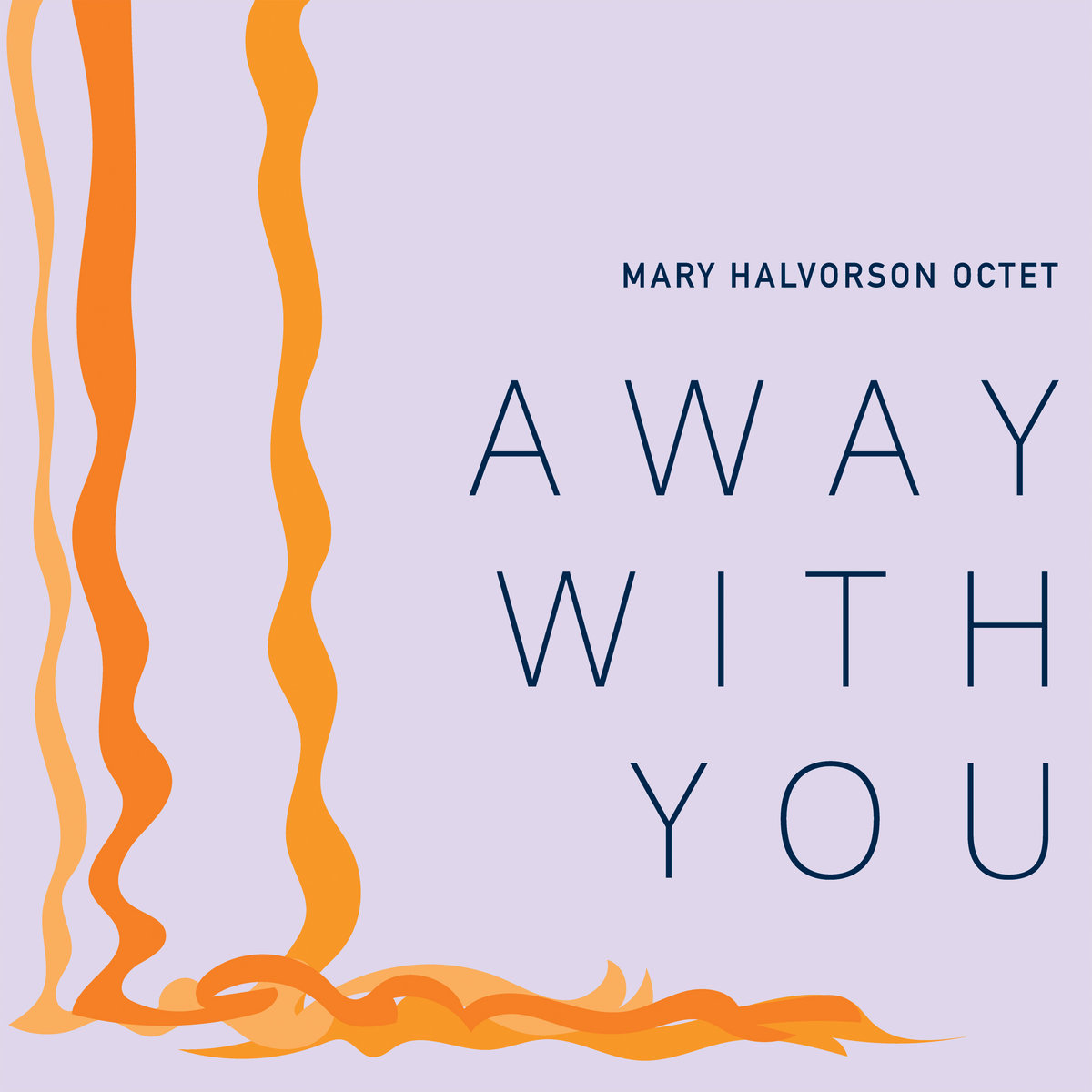
Mary Halvorson Octet - Away With You

Mary Halvorson Octet
Away With You

Jonathan Finlayson - trumpet
Jon Irabagon - alto saxophone
Ingrid Laubrock - tenor saxophone
Jacob Garchik - trombone
Mary Halvorson - guitar
Susan Alcorn - pedal steel guitar
John Hébert - bass
Ches Smith - drums

Just got through listening to Mary Halvorson’s amazing new album with her Octet, Away With You (Because of the letterspacing on the cover, at first I thought the title was A Way With You, which is a nice play on words if you think about it!) This recording hit me so hard that I had to come out of my blog retirement to comment on it.

No real dominant voice, everything is very well-balanced throughout, and it’s the ensemble sound that you notice. One unique quality to the arrangements is Susan Alcorn’s pedal steel, an instrument I generally steer clear of even though I was born in the South. Here, however, it blends remarkably well with the woodwinds and brass, as well as Ms. Halvorson’s guitar.

Away With You builds on Ms. Halvorson’s work on her previous Firehouse 12 group recording, Illusionary Sea; in fact, it’s the same group with the addition of Ms. Alcorn. Listening to Away With You brought to mind Michael Formanek’s The Distance, not in the specific sound but in the way each offers a fresh take on arranging for larger groups of instruments.

This is brilliant stuff. It releases on October 28, but you can pre-order at Firehouse 12’s Bandcamp page.


Sunday, April 24, 2016

My favorite things, pt. 4: Balance Point Acoustics

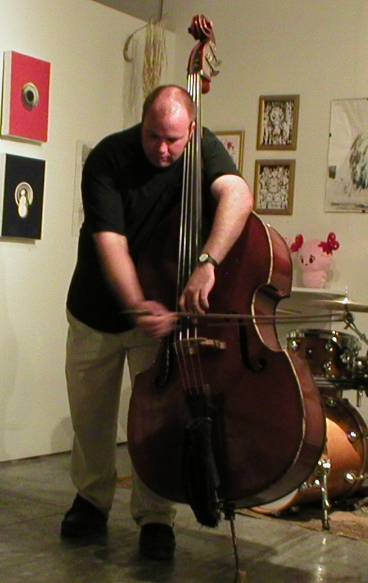
Wrapping up this series of "My favorite things" is bassist Damon Smith and his label, Balance Point Acoustics. Smith was active on the West Coast avant-garde scene, founded the label in 2001 and then relocated to Houston, Texas in 2010. Damon is known for his adventurous playing, an insatiable thirst for listening to new music, and his culinary adventures (which he documents on Facebook). He's also known for his outspoken opinions on other players, something of a rarity among improvising musicians, at least in public. I recall his comparison of MOPDK's Kevin Shea to Jimmy Cobb generated strong reactions when the group's Blue album, a recreation of Kind of Blue, came out.
Smith has played with musicians from all over the world, and is known for long-running collaborations with guitarists Henry Kaiser and Sandy Ewen. Some of the work on Balance Point Acoustics that I've enjoyed recently include:

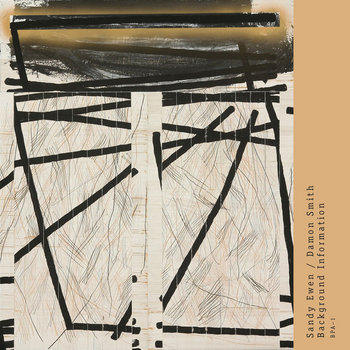
Sandy Ewen/Damon Smith - Background Information


Fred Van Hove / Peter Jacquemyn / Damon Smith - Burns Longer


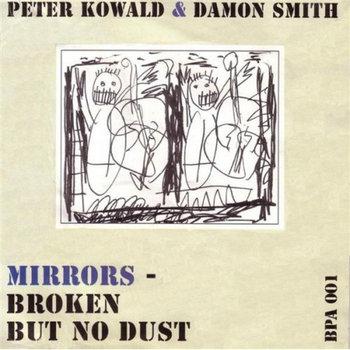
Peter Kowald/Damon Smith - Mirrors Broken - But No Dust


One other outstanding album on which he plays is on the Nuscope label:

Magda Mayas / Damon Smith / Tony Buck - Spill Plus


Sunday, April 3, 2016

My favorite things, pt. 3: Setola Di Maiale

I've sung the praises of drummer Stefano Giust's label before on this blog. Founded in 1993, Setola Di Maiale continues to put out a steady stream of releases that combine some names you know with some you don't, and are always challenging and worthwhile.

These CR-Rs are well-recorded and come housed in contemporary, eye-catching graphics, most of them designed by Giust himself, who trained as a graphic designer. Setola Di Maiale illustrates how vibrant an improvised music scene there is in Italy, in the same way For Tune highlights Polish musicians.

Some recent Setola Di Maiale releases I've enjoyed are:

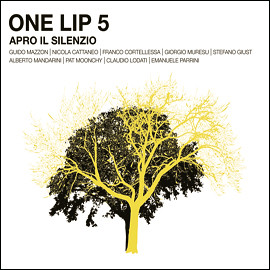
One Lip 5 - Apro il Silenzio (I open the silence); with Guido Mazzon, Nicola Catteneo, Franco Cortellessa, Alberto Mandarini, Stefano Giust, etc.


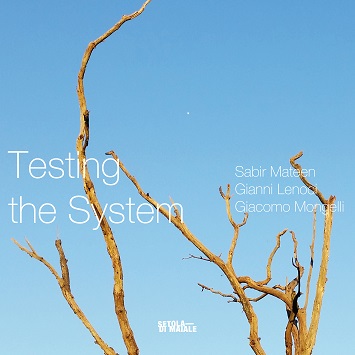
Sabir Mateen (sax), Gianni Lenoci (piano), Giacomo Mongelli (drums) - Testing the System


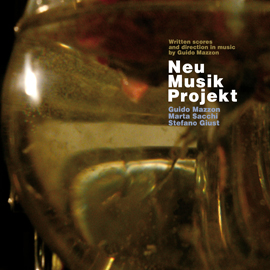
Guido Mazzon (trumpet), Marta Sacchi (clarinets), Stefano Giust (percussion) - Neu Musik Projekt


The site is down temporarily, but you can see most of the catalog at Discogs.